Tel : 01273 936055
Restore or replace stone floor
Restore or replace stone floor. It's the question most Sussex homeowners ask when they look down at a tired, dull or damaged stone floor: do I restore it, or rip it out and start again?
Jon Hillier
3/26/20263 min read
Stone Floor Restoration vs Replacement — Which Is Right for You?
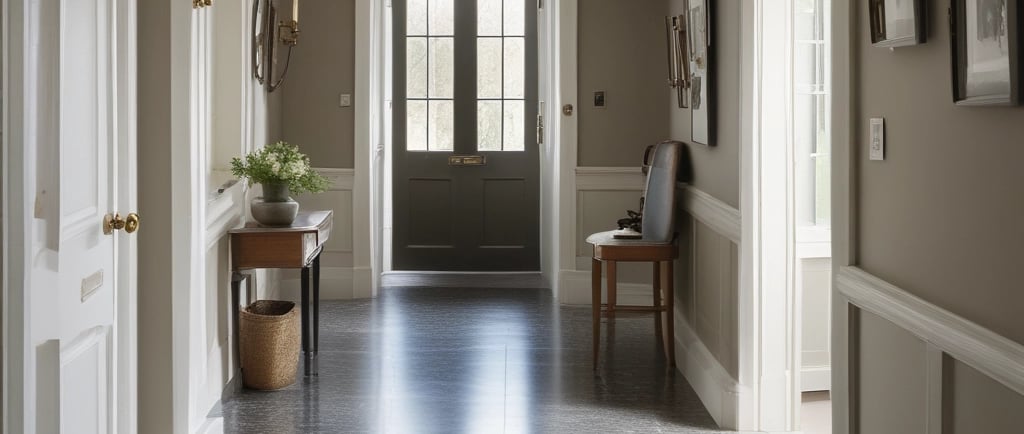
It's the question most Sussex homeowners ask when they look down at a tired, dull or damaged stone floor: do I restore it, or rip it out and start again? The honest answer is that for the vast majority of stone floors, restoration wins — hands down. But there are situations where replacement makes more sense, and it's worth understanding the difference before you commit.
In this guide we'll walk you through the costs, the disruption, the results, and the specific circumstances where each option makes the most sense. By the end, you'll have a clear picture of which route is right for your floor.
The cost comparison: restoration vs replacement in Sussex
This is usually where the decision starts — and the numbers tell a pretty clear story.
Replacement costs include stone materials (£50–£150+ per m² supply only), specialist installation labour (£35–£60 per m²), subfloor preparation, adhesive, grout, sealing and waste removal. Sussex South East rates apply throughout.
For most mid-condition stone floors, restoration costs roughly a third of what replacement would. That's a significant saving — and in many cases, the restored floor looks every bit as good as a new one.
When replacement might be the better option
There are circumstances where replacement makes more sense. Being honest about these is important — we'd rather give you the right advice than push you towards restoration when it's not the best answer.
The stone is structurally damaged beyond repair
If tiles are cracked through their full depth, have lifted from the subfloor, or are suffering from subsidence or damp issues beneath them, restoration can only go so far. Surface restoration can't fix structural problems. In these cases, the underlying issue needs to be addressed first — and depending on how widespread the damage is, replacement may be more cost-effective than repairing and then restoring.
The floor is too thin to grind
Professional stone restoration involves diamond grinding to remove surface damage. This requires the stone to be at least 20mm thick. Tiles thinner than this can't be safely ground down — which means deep scratches, severe etching or major lippage (where tiles sit at uneven heights) may not be fully fixable. In these cases, the options are limited to cleaning, polishing and sealing, which may not achieve the result you're hoping for.
More than 30% of tiles need replacing
Matching replacement tiles to existing stone is one of the trickiest aspects of restoration. Stone varies between quarry batches, so finding exact matches for colour, texture and finish can be very difficult — sometimes impossible. If a significant proportion of your floor needs tile-level replacement (rather than surface restoration), you may find that a complete replacement with consistent new stone gives a better overall result.
You want a completely different look
Restoration returns your floor to its best version of itself — it doesn't transform it into something different. If you've fallen out of love with your stone type, colour or finish and want something fundamentally different, replacement is the only way to achieve that.
The replacement verdict
Replacement makes sense when there's structural damage, the stone is too thin to grind, a large proportion of tiles need replacing, or you simply want a different look entirely. In all other cases, restoration is likely to serve you better.
A real-world cost example for a Sussex home
To make this concrete, here's how the numbers might look for a typical Sussex property with a 25m² limestone floor in the hallway and kitchen:
Estimates based on 2026 South East England pricing. Actual costs depend on floor condition, stone type, access and contractor. Always get a written quote after a site survey.
How to decide: three questions to ask yourself
If you're still not sure which route to take, these three questions will usually point you in the right direction:
Is the stone physically intact? If tiles are firmly fixed with no structural damage, start with a restoration quote.
Are you happy with the stone itself? If you like the look and just want it back to its best, restoration is the answer. If you want something completely different, replacement is the only option.
What's your budget? If cost is a significant factor, restoration will almost always be the more affordable path — often by tens of thousands of pounds on larger floors.
The best starting point in almost every case is a free site survey from a reputable Sussex stone restoration specialist. A good contractor will give you an honest assessment — including telling you clearly if replacement is genuinely the better option — before you commit to anything.
Not sure which option is right for your floor?
We offer free, no-obligation surveys across East and West Sussex — including Brighton, Lewes, Eastbourne, Chichester, Worthing, Horsham and surrounding areas. We'll give you an honest assessment of your floor and a clear recommendation, with no pressure either way.
Visit: sssr.co.uk/contact
Contact us
SSSR
4 The Twitten
Albourne
BN69DF
info@sssr.co.uk
01273 936055
SSSR© 2026. All rights reserved.
Stone Floor Restore Limited : Trading as SSSR
Company Number : 17402188