Tel : 01273 936055
Flagstone Floor Restoration in Sussex
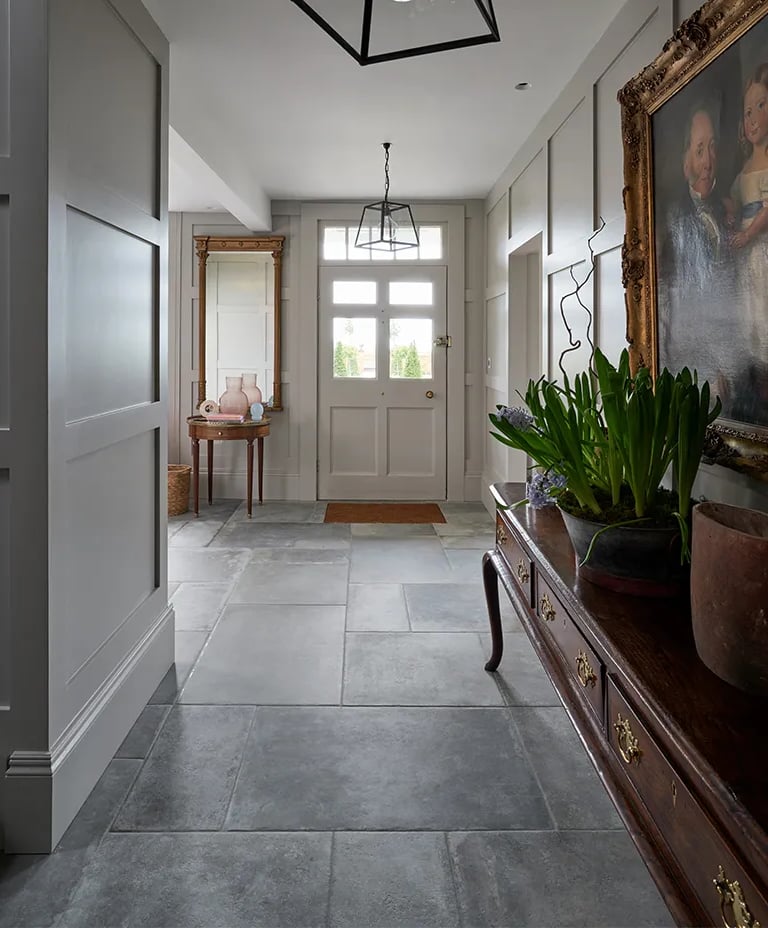
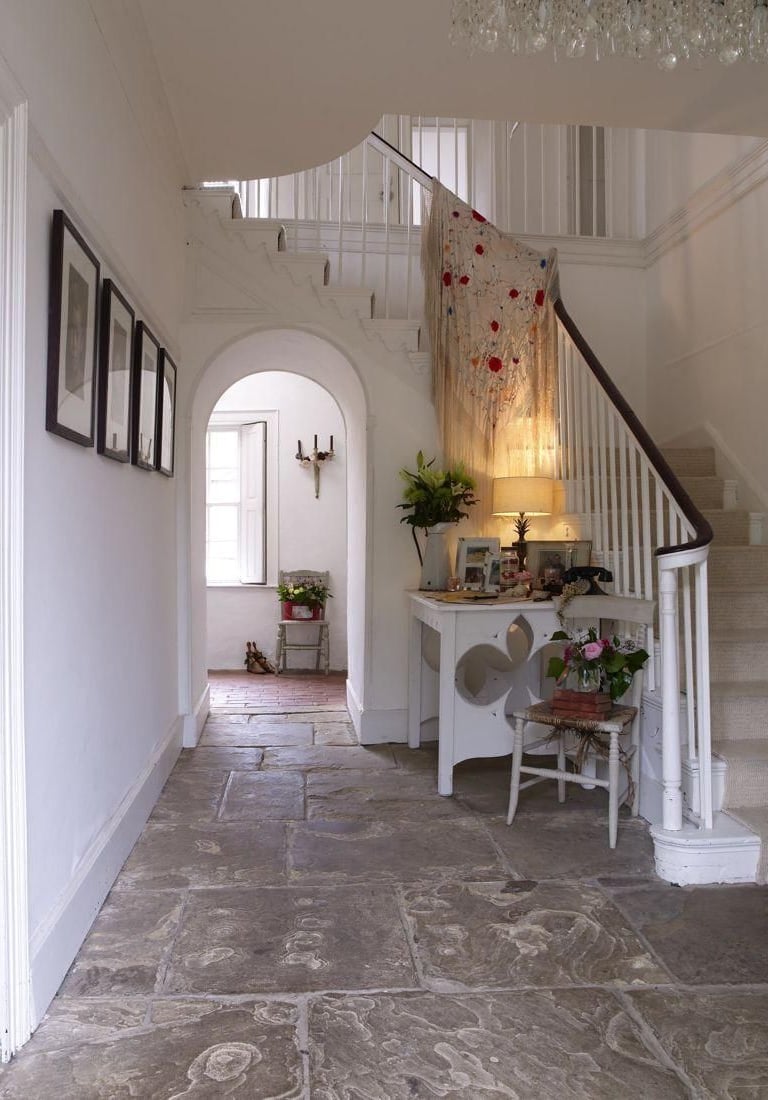
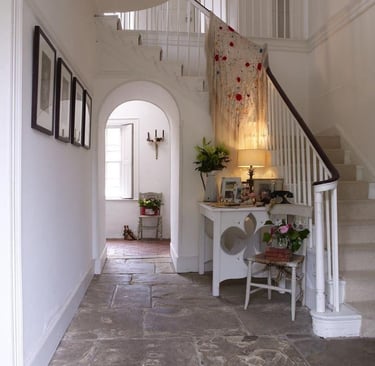
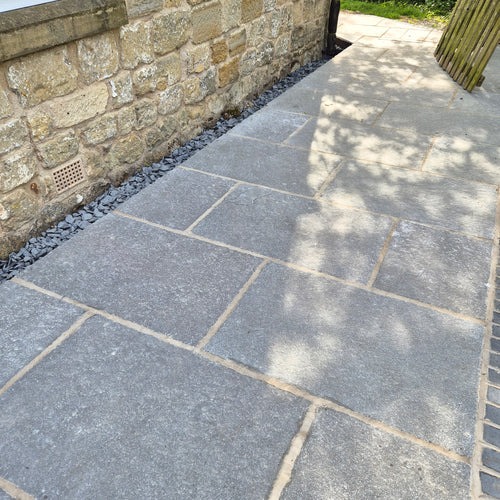
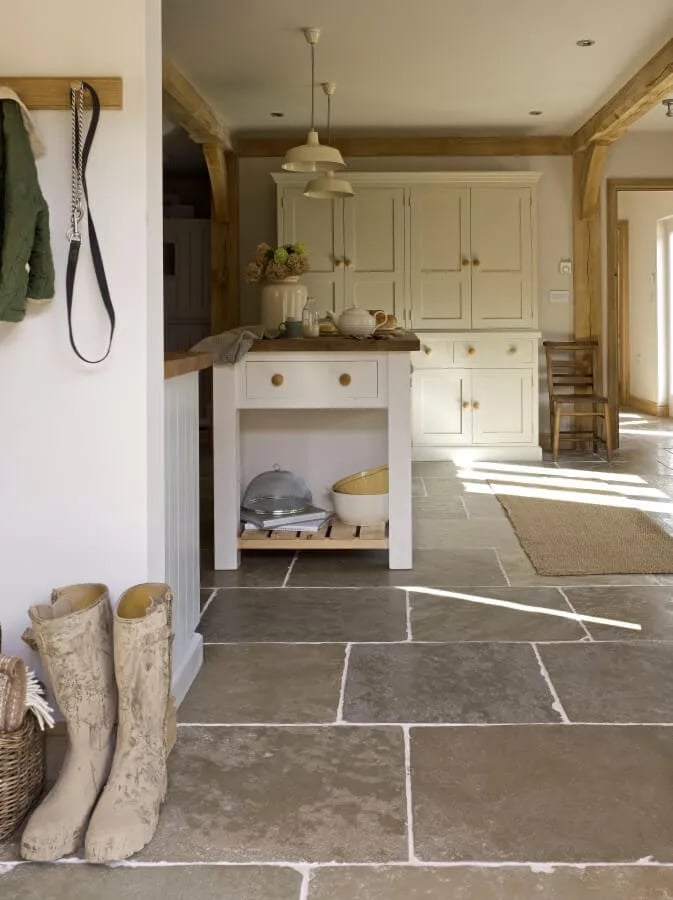
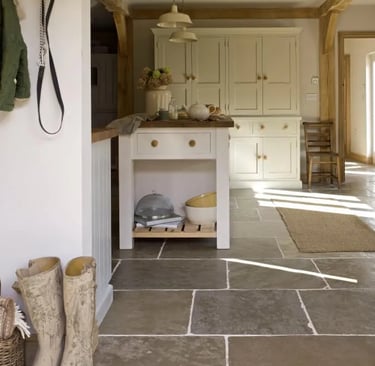
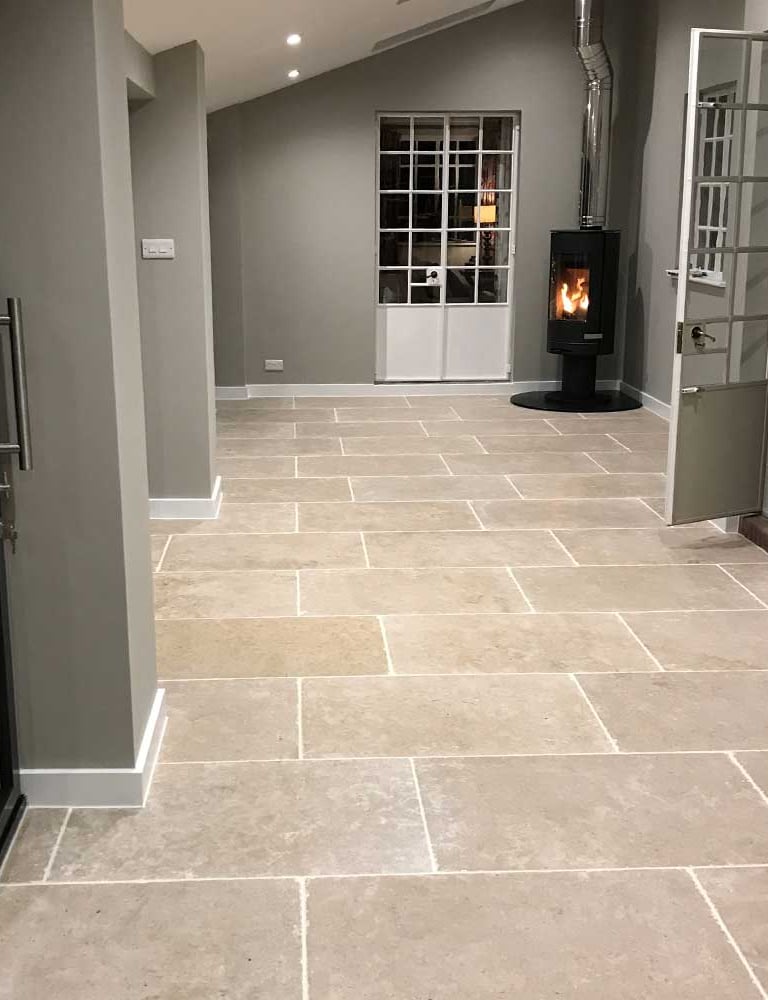
Flagstone floors are among the most characterful surfaces you'll find in any home. Large, irregular slabs of natural stone — often Sussex sandstone, York stone, Welsh slate, Indian sandstone or reclaimed limestone — laid by hand across the ground floor of a period farmhouse, cottage, barn conversion or country kitchen. Every flagstone floor is different, shaped by the specific stone used, the way it was laid, and the life it has lived since. And every flagstone floor, no matter how neglected it might look today, can almost always be restored to something remarkable.
We specialise in the professional restoration of flagstone floors across East and West Sussex, with particular experience in period properties, listed buildings, barn conversions and country homes. Whether your flagstones are hidden under decades of old wax, darkened by ingrained grease, covered with modern varnishes that shouldn't have been used, or simply worn and dull after years of foot traffic — professional restoration transforms the floor while preserving its character and heritage value.
What makes flagstone floors different
The term 'flagstone' describes a type of floor — large, flat stones laid together to form a surface — rather than one specific stone. In Sussex properties we commonly encounter:
Sussex sandstone flagstones — locally quarried, warm brown and golden tones, found in many of the county's older rural properties
York stone flagstones — a harder-wearing sandstone from Yorkshire, widely used in kitchens and hallways
Welsh slate flagstones — dark grey to almost black, often found in Victorian-era utility areas and outbuildings
Reclaimed limestone and sandstone — typical in barn conversions and sympathetic period renovations
Indian sandstone flagstones — more recent installations, very common in modern country-style kitchens and conservatories
Each of these requires slightly different treatment during restoration, and identifying the stone correctly is the first job during any survey. A restoration approach that works beautifully on York stone may be inappropriate for Welsh slate, and vice versa. This is where experience matters most.
Common problems with flagstone floors
Flagstone floors often have decades — sometimes centuries — of history layered into them. The issues we most commonly encounter across Sussex include:
Old linseed oil, beeswax and traditional coatings that have darkened over decades and now attract dirt rather than repelling it
Unsuitable modern coatings — varnishes, polyurethane or acrylic sealers that were never meant for natural stone and have since yellowed, flaked or caused damp issues
Ingrained greasy soil in kitchen flagstones from years of cooking
Paint splashes, plaster spatter and building-work contamination — especially in recently renovated properties
Uneven tiles and lippage that needs assessment before any aggressive treatment is considered
Missing or damaged stones that need careful sourcing of matching reclaimed material
Efflorescence and damp-related staining in older floors without damp-proof membranes
Failed or discoloured grout lines throughout
A note on listed buildings and heritage properties
Flagstone floors in listed Sussex properties require particular care, and in some cases may be subject to preservation orders that affect how they can be treated. We've worked on heritage properties across Sussex and understand the additional considerations involved — including the need to preserve original character, use breathable and reversible treatments where possible, and respect the historic fabric of the building. If your property is listed, we're happy to discuss the appropriate approach during the free survey.
Our flagstone restoration process
Every flagstone restoration starts with a free site survey. Because flagstone floors vary so much from one to the next, we take time at this stage to identify the stone type, assess the condition of the tiles and grout, check for damp, and discuss your expectations for the finish. From there, a typical restoration involves:
Identification and assessment
We identify the specific stone — sandstone, York stone, slate, limestone or other — and assess its thickness, condition and any structural issues. This dictates every decision that follows.
Deep cleaning and stripping
Using specialist alkaline and, where needed, solvent-based cleaners, we strip away old waxes, oils, varnishes and sealers. This is carried out with rotary floor machines and carbide brushes, working the cleaning solutions into the textured surface of the flagstones and rinsing thoroughly between stages.
Repairs and replacements
Where stones are cracked, chipped or missing, we carry out appropriate repairs. For missing or badly damaged stones in period floors, we source reclaimed matching material where possible — matching new stone to period flagstones is notoriously difficult, and preserving as much of the original floor as possible is almost always the right approach.
Levelling (where appropriate)
For some modern flagstone floors with significant lippage, careful milling can level the surface and reduce unevenness. This is never done on period floors without very careful consideration, as it removes original stone material that cannot be replaced.
Drying
Flagstone floors — especially in period properties — need to be fully dry before sealing, which may mean leaving the floor overnight. Moisture readings are taken before the final stages to ensure the sealer will cure properly.
Sealing with the right product
For most Sussex flagstone floors we use a breathable impregnating sealer that enhances the natural colour and protects against staining while allowing the stone to manage moisture naturally. The specific product is chosen based on the stone type, the property, and the finish you want. A natural matte finish is usually most appropriate for period flagstones; modern floors can take a slightly higher sheen if desired.
Why choose SSSR for flagstone restoration
Over 25 years of hands-on experience with natural stone floors, including period and listed properties
We identify the specific stone type and tailor our approach accordingly — no one-size-fits-all treatment
Experience with Sussex farmhouses, cottages, barn conversions and country kitchens throughout both counties
Breathable sealers chosen to suit your specific floor and property
Free site survey and written quote before any commitment
We do the work ourselves — no subcontracting
Workmanship guarantee on every completed job
Areas we cover
We carry out flagstone floor restoration throughout East and West Sussex, with particular experience in rural areas and period properties across the Weald, the South Downs and the coastal towns. Areas covered include Brighton & Hove, Lewes, Eastbourne, Chichester, Worthing, Horsham, Haywards Heath, Crawley, East Grinstead, Petworth, Arundel, Midhurst, Uckfield, Crowborough, Mayfield, Burgess Hill, Hurstpierpoint, and all surrounding villages and hamlets.
Free, No-Obligation Flagstone Floor Survey
Every Flagstone floor is different, and the only way to give you an accurate quote is to see it. We offer free, no-obligation surveys and written quotes across East and West Sussex — including Brighton & Hove, Lewes, Eastbourne, Chichester, Worthing, Horsham, Haywards Heath, East Grinstead and all surrounding areas.
Visit: sssr.co.uk/contact | Call: 01273 936055
Contact us
SSSR
4 The Twitten
Albourne
BN69DF
info@sssr.co.uk
01273 936055
SSSR© 2026. All rights reserved.
Stone Floor Restore Limited : Trading as SSSR
Company Number : 17402188