Tel : 01273 936055
Granite Floor Restoration Sussex
What to expect from a granite floor restoration project.
Jon Hillier
4/10/20264 min read
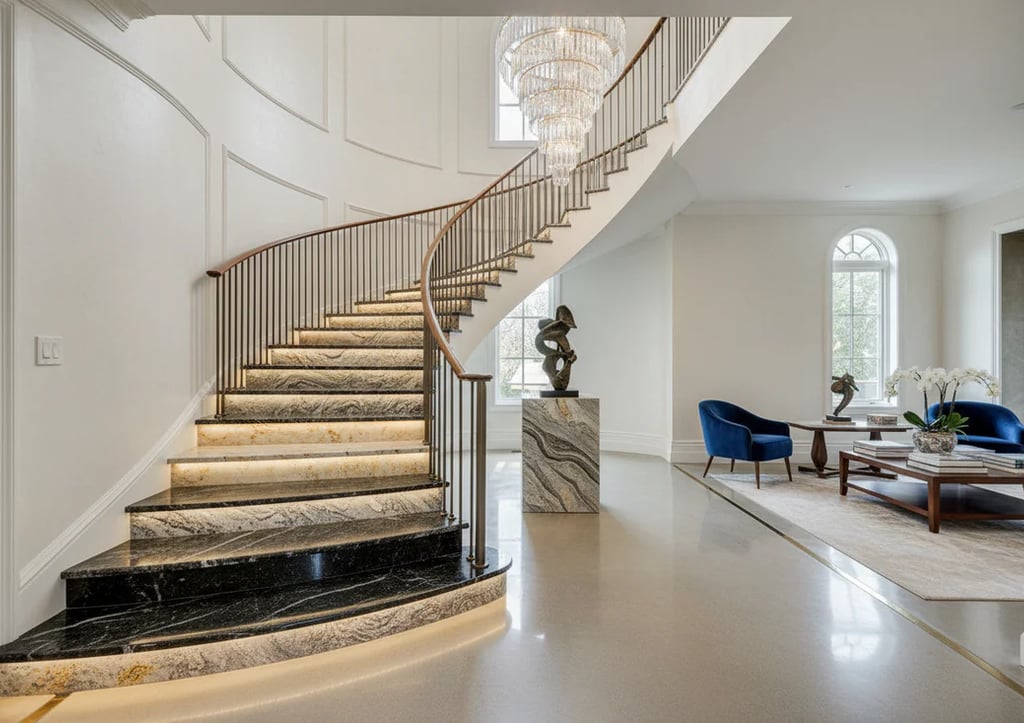
Granite Floor Restoration in East and West Sussex
Granite is one of the most impressive natural stone floors you can have in a home. Dense, lustrous and extraordinarily durable, a well-laid granite floor is built to last for generations. But even granite — the hardest of the commonly used flooring stones — loses its polish over time, collects scratches from daily use, and can look dull and flat long before its structural life is anywhere near over.
The good news is that granite responds exceptionally well to professional restoration. When it comes back, the depth of colour, the reflective quality and the sheer visual impact of a fully restored granite floor is genuinely stunning. This guide explains what makes granite different, what restoration involves, and what Sussex homeowners can realistically expect to pay.
What makes granite different from other stone floors?
Granite is an igneous rock — formed under enormous heat and pressure deep within the earth. That geological history gives it properties that set it apart from softer stones like marble, limestone and travertine.
It is exceptionally hard
Granite sits at 6–7 on the Mohs hardness scale, making it one of the hardest natural flooring materials available. This hardness is what gives granite its outstanding durability and scratch resistance — but it also means that the diamond abrasives used during restoration have to work much harder to cut and refine the surface. Jobs that take a day on marble may take a day and a half or more on granite, which is reflected in the pricing.
It does not etch
Unlike marble, limestone and travertine — all of which are calcium-based and react badly to acids — granite is silica-based and highly resistant to etching. Acidic spills like wine, lemon juice and vinegar that would leave permanent dull marks on marble simply don't affect granite in the same way. This makes granite a particularly practical choice for kitchens, though it is not entirely impervious to damage.
It can stain if left unsealed
Despite its density, granite is still porous at a microscopic level. Oils, wine, coffee and other liquids can penetrate an unsealed or poorly sealed granite floor over time, leaving stains that are difficult to remove. Professional restoration always includes sealing with a quality impregnating sealer as a final step — this is what keeps a restored granite floor looking its best for years.
It can achieve an outstanding polish
Because of its hardness and crystalline structure, granite can be polished to a higher gloss than almost any other flooring stone. A properly restored granite floor has a mirror-like reflective quality that enhances both the depth of colour and the visual size of the room — and that polish, once achieved, lasts considerably longer than on softer stones.
Why does granite lose its shine?
Despite its toughness, granite floors do deteriorate over time — and the process is so gradual that many Sussex homeowners barely notice it happening until they see an old photograph and realise just how much has changed.
Foot traffic — millions of tiny steps gradually abrade the polished surface, particularly in high-traffic areas like hallways and kitchen thoroughfares
Grit and fine particles — carried in on shoes, these act like sandpaper across the surface with every step, leaving microscopic scratches that scatter light and reduce reflectivity
Incorrect cleaning products — alkaline degreasers, some multi-surface sprays and cleaning products that leave a residue can all dull granite over time and interfere with the sealer
Loss of sealer — without periodic resealing, the protective barrier breaks down and the stone becomes more susceptible to staining and surface degradation
Lippage — over time, slight movement in the subfloor can cause tiles to sit at marginally different heights, creating an uneven surface that catches the light poorly
What does professional granite restoration involve?
Granite restoration follows a similar broad process to other stone floors — assessment, cleaning, mechanical work, polishing and sealing — but the equipment used has to be considerably more robust, and the process takes longer. Here's what a typical job involves:
How much does granite floor restoration cost in Sussex?
Granite sits at the higher end of the stone restoration cost range — not because it is a more prestigious material, but simply because it takes longer to grind, hone and polish than softer stones. The diamond tools have to work harder and for longer to achieve the same result, which translates directly into additional labour time.
As a practical guide, a granite hallway floor of around 20m² in moderate condition — dull, scratched, with some loss of sealer — would typically cost in the region of £1,100–£1,500 for a full professional restoration including sealing. The restored floor should then hold its finish for seven to ten years in a residential setting with correct aftercare — longer than most other stone types, thanks to granite's exceptional hardness.
Granite restoration in Sussex period properties
Granite floors are found across a wide range of Sussex properties — from Victorian and Edwardian homes in Brighton & Hove, Eastbourne and Worthing where black granite was a popular hallway material, to contemporary new-builds across Chichester, Horsham and Haywards Heath where large-format grey and beige granites are frequently specified. Older properties sometimes feature original granite flagstones or setts, particularly in utility areas and outbuildings.
In all cases, professional restoration is almost always significantly more cost-effective than replacement — and for original granite in a period property, it is usually the only way to preserve the character and value of the floor. Matching original granite varieties is notoriously difficult, and the disruption and cost of full replacement can be considerable.
Maintaining your granite floor after restoration
Granite is the most forgiving of the natural stone floors when it comes to everyday maintenance, but a few simple habits will keep a restored floor looking its best for as long as possible:
Clean with a pH-neutral stone-safe product — avoid anything labelled 'multi-surface', 'bathroom cleaner' or containing bleach
Wipe up oil-based spills promptly — cooking oil and grease are the main staining risk on granite
Use entrance matting to reduce grit brought in on shoes — this is the biggest single cause of surface wear
Have the floor resealed every three to five years, or sooner if the water bead test shows the sealer is failing
Consider a light maintenance polish every two to three years to keep the surface at its best between full restorations
How long will the finish last?
A professionally restored granite floor in a Sussex home can hold its finish for seven to ten years or more with good aftercare — considerably longer than marble or limestone. Granite's exceptional hardness means the polished surface is simply more resistant to the everyday wear that dulls softer stones. This makes granite restoration one of the best long-term investments in the natural stone floor category.
Have a granite floor in Sussex that needs restoring?
We offer free, no-obligation surveys and written quotes across East and West Sussex — including Brighton & Hove, Lewes, Eastbourne, Chichester, Worthing, Horsham, Haywards Heath and all surrounding areas. Granite restoration is one of the most rewarding jobs we do — get in touch and see what your floor could look like.
Visit: sssr.co.uk/contact
Contact us
SSSR
4 The Twitten
Albourne
BN69DF
info@sssr.co.uk
01273 936055
SSSR© 2026. All rights reserved.
Stone Floor Restore Limited : Trading as SSSR
Company Number : 17402188