Tel : 01273 936055
Slate Floor Restoration in Sussex
Techniques and Costs
Jon Hillier
4/21/20265 min read
Slate Floor Restoration in Sussex — Techniques and Costs
Slate floors bring a character that few other surfaces can match. Deep blues and greys, rich greens and purples, warm rust tones and striking blacks — slate is one of the most visually distinctive flooring materials you can have in a home. Its durability is exceptional, and with proper care a slate floor will outlast almost any other flooring material on the market. But slate is also one of the most commonly misunderstood stones when it comes to restoration, and the wrong approach — or the wrong sealer — can do lasting damage.
This guide explains how professional slate floor restoration actually works in Sussex, what makes slate different from other natural stones, what the process involves, and what you can expect to pay across East and West Sussex.
What makes slate different
Slate is a metamorphic rock — formed over millions of years from compressed clay, mud and volcanic ash. That structure gives slate its most distinctive property: it cleaves naturally into thin, flat sheets, which is what makes it so well-suited to flooring in the first place. But slate is a far more varied material than many people realise, and the right restoration approach depends entirely on which type of slate you have.
Why slate is restored differently from other stones
Slate is typically cleaned and resealed rather than polished in the traditional sense. Unlike marble, limestone or granite, slate has a naturally riven (textured) surface that gives it its character and slip resistance, and aggressive diamond polishing would destroy that texture. For most slate floors, the restoration process focuses on three things:
Stripping off old sealers, wax, varnish and contamination that has built up over the years
Deep cleaning the textured surface to lift ingrained dirt from every crevice
Applying the correct new sealer to protect the floor and enhance its natural colour
On some modern honed slate installations a light diamond refinement is appropriate, and on rare occasions a 'high gloss' finish is requested — but for the vast majority of Sussex slate floors, the goal of restoration is to reveal and protect what's already there rather than to fundamentally change the surface.
Common problems with slate floors in Sussex
The issues we most often encounter on Sussex slate floors include:
Old polyurethane or varnish-type sealers applied in previous decades, now yellowed and peeling
Multiple layers of acrylic sealers building up over time, trapping dirt and looking patchy
Failed sealer in high-traffic areas — water no longer beads on the surface, and dirt is becoming ingrained
Plaster, paint or builder's mess from renovation work that was never properly cleaned off
Efflorescence (salt deposits) on older floors without damp-proof membranes
Dull, lifeless appearance where the natural colour of the slate has been obscured by grime
Chipped or cracked tiles, especially around kitchen doorways and high-wear areas
Discoloured or deteriorating grout lines making the whole floor look tired
Our professional slate restoration process
A typical professional slate restoration in a Sussex home follows a clear sequence. The exact approach is always tailored to the specific slate type and condition, but these are the core stages:
1. Assessment and identification
We identify the specific type of slate, assess its condition, check for any existing sealer or coating, test moisture levels, and examine the grout and any chipped or cracked tiles. From this assessment we recommend the appropriate process and products.
2. Stripping old sealers and coatings
Where previous sealers are present — and they almost always are — these are stripped off using specialist alkaline or solvent-based products applied with rotary scrubbing machines. This is often the most labour-intensive stage on older slate floors, particularly where multiple layers of different products have built up over the years.
3. Deep cleaning
With coatings removed, we deep-clean the slate using specialist alkaline cleaners that penetrate the textured surface and lift out ingrained dirt from every crevice. For badly contaminated floors this stage may be repeated. Grout lines are scrubbed separately to bring them back to a consistent appearance.
4. Repairs
Chipped or cracked tiles are filled with colour-matched resin, and missing or badly damaged tiles can be replaced where suitable matching material is available. Damaged grout is raked out and replaced as needed.
5. Drying
Slate floors must be completely dry before sealing — typically 24 to 48 hours after cleaning, depending on the floor and the weather. Sealing a damp floor causes the sealer to cure badly and fail prematurely, which is a common problem on DIY slate restorations.
6. Sealing
The final stage is applying the right sealer for your floor. For most Sussex slate floors this means a breathable impregnating sealer that protects against staining while allowing the stone to manage moisture naturally. Some homeowners prefer a slight sheen, which can be achieved with a water-based topical sealer applied in multiple thin coats. The right choice depends on the slate type, the use of the room, and whether the floor has a damp-proof membrane beneath it.
Colour enhancement — a genuine restoration benefit
Many slate floors benefit from a colour-enhancing sealer, which intensifies the natural tones in the stone without changing its character. On a deep-grey Welsh slate or a multicoloured Brazilian slate floor, the transformation at this stage can be dramatic — colours that had been obscured for years become vivid again. We'll discuss options at survey stage and can show sample finishes on your specific floor.
As a practical guide, a slate kitchen floor of around 20m² in moderate condition — sealer failing, some ingrained dirt, grout lines darkening — would typically cost in the region of £800–£1,100 for a full professional restoration including resealing
Slate floors in Sussex properties
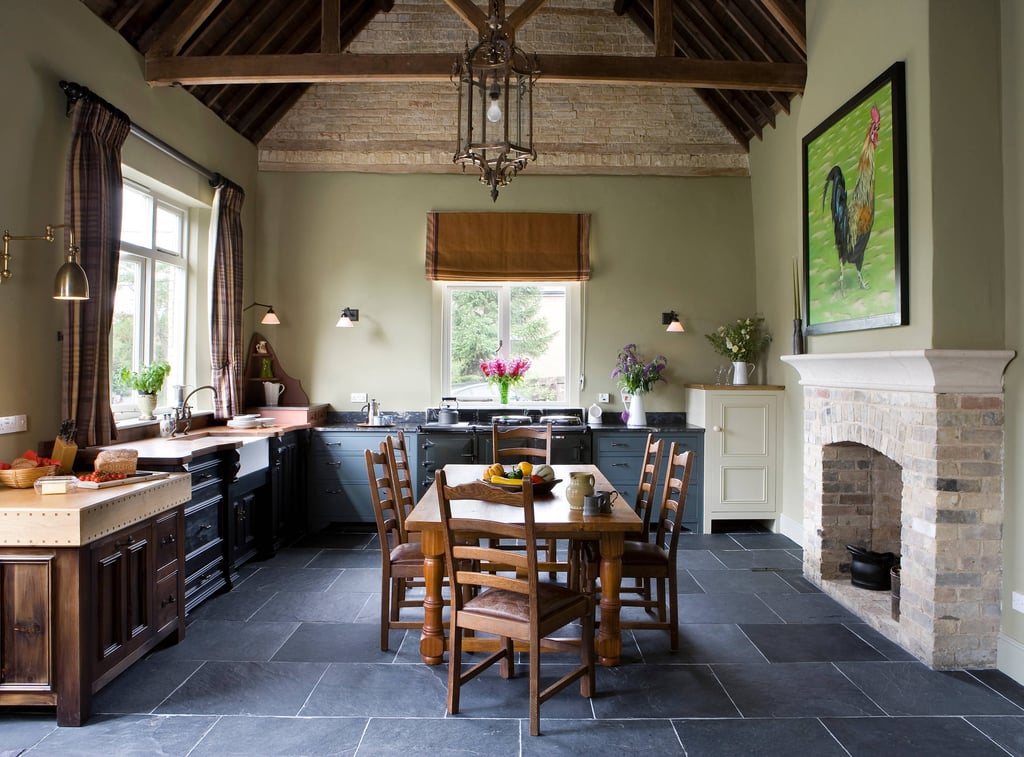
Slate is found across a wide range of Sussex property types. In older homes, you'll often find original Welsh slate flooring in utility rooms, sculleries, entrance halls and downstairs bathrooms of Victorian and Edwardian properties — particularly in Brighton & Hove, Lewes and the coastal towns. In contemporary homes and barn conversions across the Weald and the Downs, slate kitchen floors are one of the most popular natural stone choices, often specified in riven or textured finishes that suit modern farmhouse aesthetics.
Whichever type of slate you have and whatever the age of the property, professional restoration is almost always significantly more cost-effective than replacement — and often produces a finish that equals or exceeds how the floor looked when first laid.
Maintaining your slate floor after restoration
Slate is one of the more forgiving natural stone floors, but a few simple habits will keep a restored floor looking its best for as long as possible:
Clean with a pH-neutral stone-safe product — avoid anything acidic (bleach, vinegar, citrus cleaners, limescale removers)
Wipe up spills promptly — particularly oil-based and coloured liquids which can stain porous slate
Use entrance matting to reduce the grit being carried onto the floor
Have the sealer refreshed every 1–3 years depending on the product used and the wear the floor sees
Consider a light maintenance clean annually to keep grout lines fresh
Have a slate floor in Sussex that needs restoring?
We offer free, no-obligation surveys and written quotes for slate floor restoration across East and West Sussex — including Brighton & Hove, Lewes, Eastbourne, Chichester, Worthing, Horsham, Haywards Heath and all surrounding areas. Whether your slate is Welsh, Brazilian, Indian or Chinese, we'll identify the stone and recommend the right approach.
Visit: sssr.co.uk/contact | Call: 01273 936055
Contact us
SSSR
4 The Twitten
Albourne
BN69DF
info@sssr.co.uk
01273 936055
SSSR© 2026. All rights reserved.
Stone Floor Restore Limited : Trading as SSSR
Company Number : 17402188