Tel : 01273 936055
Can you restore a stone floor after years of neglect?
What's possible with restoring Stone floors
6/8/20265 min read
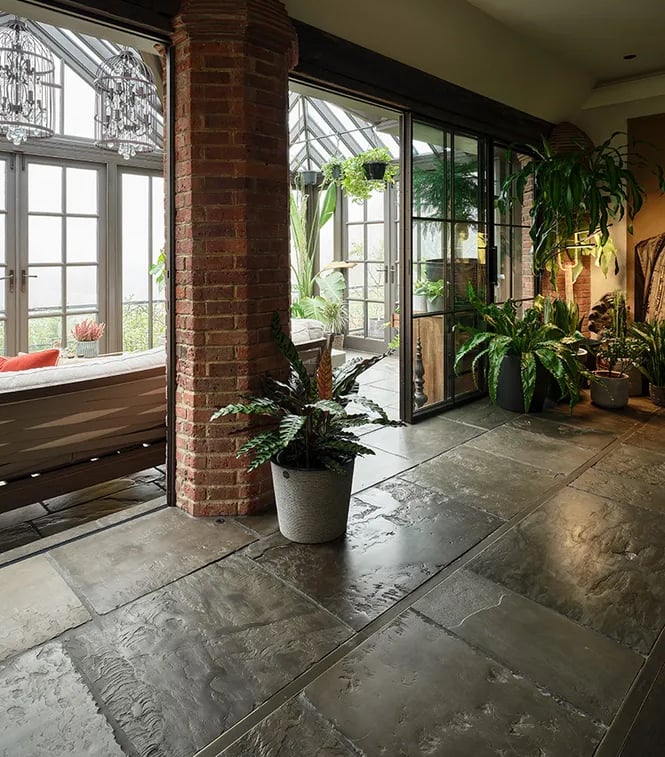
Can You Restore a Stone Floor that's Been Neglected for Years?
It's a question we hear all the time from Sussex homeowners, often with a note of resignation in their voice: "I think it's probably too far gone." The floor has been hidden under carpet for decades, or coated in flaking old sealer, or simply walked on and washed with the wrong products for twenty years until it looks grey, dull and lifeless. Surely, the thinking goes, it's beyond saving?
In the overwhelming majority of cases, the answer is a genuine and emphatic yes — it can be restored. Stone is one of the most forgiving materials there is, precisely because it's so durable. We've brought back floors that owners had completely written off, and the transformation is often the most dramatic part of our work. This guide explains what's actually possible, what the process involves for a badly neglected floor, and where the genuine limits lie.
Why neglected stone floors are so often salvageable
The key thing to understand is that most of what makes a neglected floor look terrible is on the surface, not in the stone itself. Decades of grime, old wax, failed sealers, ingrained dirt and surface staining sit on top of and within the first millimetre or two of the stone. The stone beneath is usually completely sound.
This is the fundamental reason neglected floors can be restored: professional restoration removes that damaged surface layer and the accumulated contamination, revealing fresh, undamaged stone beneath. A floor that has been buried under carpet since the 1970s, or coated in yellowing varnish, or never once professionally cleaned, very often has beautiful stone hiding just below the mess. Our job is to get it back.
Stone has been doing this for centuries
One of the most reassuring facts about stone restoration is the age of the floors that can be brought back. Restoration professionals across the UK routinely work on flagstone floors that are one, two, even three hundred years old — floors that have survived generations of use and neglect and still restore beautifully. If a 300-year-old farmhouse floor can come back, a 30-year-old kitchen floor almost certainly can too.
Common situations we're called to in Sussex
The neglected floors we're asked to assess across East and West Sussex tend to fall into a few recognisable categories:
Floors hidden under carpet or vinyl
Original Victorian tiles, quarry tiles, flagstones and stone floors are frequently discovered under carpet, lino or vinyl when Sussex homeowners renovate. These floors are often in remarkably good condition once the covering and old adhesive are removed — they've effectively been protected from wear, even if the removal process reveals adhesive residue and some staining to deal with.
Floors coated in old sealers or wax
Many older floors were treated decades ago with wax, linseed oil, or topical varnish-type sealers that have since yellowed, darkened, cracked and started attracting dirt rather than repelling it. These coatings can be stripped away professionally, often revealing dramatically brighter stone underneath.
Floors simply never properly maintained
The most common situation of all: a floor that's been walked on and mopped with ordinary household cleaners for years or decades, gradually accumulating grime, losing its finish and looking progressively greyer and duller. These floors respond extremely well to professional deep cleaning followed by honing and resealing.
Floors damaged by building work
Plaster, paint, cement and adhesive from renovation or building work can leave a stone floor looking ruined. In most cases these contaminants can be removed professionally without damaging the stone beneath, even when the floor looks hopelessly messy.
What restoring a badly neglected floor involves
Restoring a neglected floor follows the same broad principles as any stone restoration, but with more emphasis on the early stages — stripping and deep cleaning — because there's simply more to remove. A typical process looks like this:
1. Assessment and testing
We start by identifying the stone type and testing a small area to see what's achievable. This test patch is genuinely important on a neglected floor; it shows both us and you exactly how well the stone will come back before any commitment is made. It's often the moment a sceptical homeowner becomes a believer.
2. Stripping coatings and coverings
Old sealers, wax, varnish, carpet adhesive and other coatings are stripped away using specialist alkaline or solvent-based products. On heavily coated floors this stage may need repeating, and it's frequently the most labour-intensive part of restoring a neglected floor.
3. Deep cleaning
With coatings removed, an intensive deep clean using rotary machines and specialist cleaning solutions lifts decades of ingrained dirt from the surface and grout lines. Grout is often cleaned by hand to get the best result. This stage alone transforms the appearance of most neglected floors.
4. Repairs and stabilisation
Neglected floors often have loose, cracked or missing tiles, open grout joints, or — in the case of old floors — fissures that need stabilising. These are repaired and, where tiles are missing, matching reclaimed material is sourced where possible. Structural issues are addressed before any finishing work.
5. Honing and polishing
Once the floor is clean, sound and dry, it's honed and (where appropriate to the stone type) polished to bring back a smooth, consistent finish. The level of finish is matched to the stone and to your wishes — from a natural matte through to a fuller polish.
6. Sealing
Finally, the floor is sealed with an appropriate impregnating sealer. On many neglected floors we use a colour-enhancing sealer, which intensifies the natural tones of the stone — the difference on a long-neglected floor can be genuinely striking, bringing colour and life back to a surface that had looked grey and dead for years.
Where the genuine limits lie
Honesty matters here, so it's worth being clear about the small number of situations where restoration may not be the full answer:
Tiles that are structurally broken right through; these may need replacing rather than restoring, though the rest of the floor can still be restored around them
Floors where a large proportion of tiles are missing; restoration can still work, but sourcing enough matching reclaimed material may be a challenge
Severe structural movement in the subfloor. If the floor itself is moving, that underlying issue needs addressing first, which is a separate job from surface restoration
Stone that has been chemically damaged throughout its thickness, extremely rare, but very aggressive chemical treatment over many years can occasionally cause damage that honing can't fully reverse
Even in these cases, a good restoration specialist can usually achieve a dramatic improvement, and will tell you honestly at survey stage what's realistic before you commit to anything.
The bottom line
If you have a neglected stone floor in your Sussex home and you've been assuming it needs replacing, it's well worth getting a professional opinion before you spend thousands ripping it out. The vast majority of neglected floors — even those that look genuinely hopeless — can be restored to a beautiful condition for a fraction of the cost of replacement, while preserving the character and originality that makes a stone floor special in the first place.
A free survey costs you nothing, and the test patch will show you exactly what's possible. More often than not, the floor you'd written off has years — even decades — of beautiful life left in it.
Think your floor is too far gone? Let us be the judge.
We've restored stone floors across Sussex that owners had written off completely. Before you consider replacement, let us take a look — you may be pleasantly surprised. We offer free, no-obligation surveys across East and West Sussex, including Brighton & Hove, Lewes, Eastbourne, Chichester, Worthing, Horsham, Haywards Heath and all surrounding areas.
Visit: sssr.co.uk/contact | Call: 01273 936055
Contact us
SSSR
4 The Twitten
Albourne
BN69DF
info@sssr.co.uk
01273 936055
SSSR© 2026. All rights reserved.
Stone Floor Restore Limited : Trading as SSSR
Company Number : 17402188